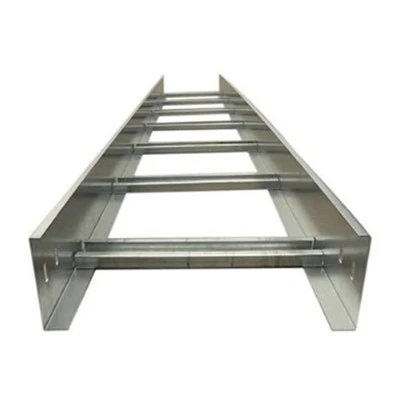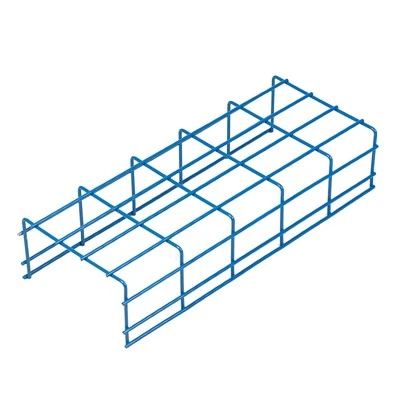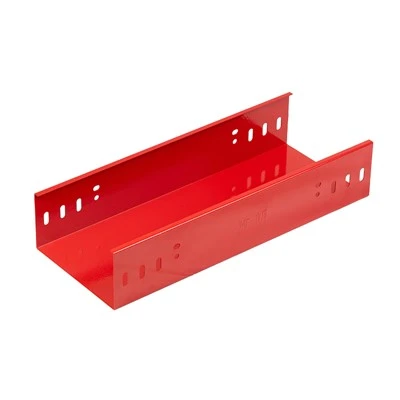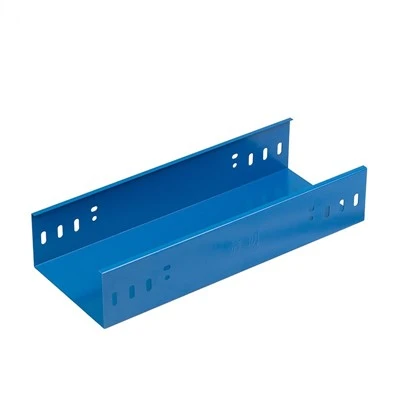

Some are passive electrical (optical) cables (such as data cables, video coaxial cables, etc.). Therefore, when designing the cabling method and routing, these should be differentiated. The design should not only meet the requirements of the specifications but also consider the safety, scalability, economy, aesthetics, and ease of maintenance. Cable trays, as carriers for various cables, are subordinate to the needs of cabling and should also follow the above principles.
Due to the parallel intersection of various pipelines within buildings and limited space, especially in large office buildings, financial and commercial buildings, hotels, stadiums, and other buildings with dense information points, cable trays are widely used in vertical shafts and suspended ceilings, in addition to floor trenches and wall-embedded conduits, to provide wiring in different directions. Various cables for low-voltage systems are categorized and placed in cable trays. The optimal route selection and installation method must be determined based on the routing requirements and in conjunction with the building structure and the locations of air conditioning, electrical, and other pipelines. Passive cables cannot be laid side-by-side with active cables. If conditions limit their placement within the same cable tray, metal partitions must be used to separate them. Cables should avoid planar crossings as much as possible. When cable trays pass through floors, walls, or expansion joints, the corresponding openings and locations should be marked on the architectural drawings to avoid omissions and subsequent drilling during construction, which could potentially damage the civil structure. To prevent electromagnetic interference (EMC), the enclosed nature of the cable trays should be considered in their design.