
When it comes to the world of cable management, aluminum trough trays stand out as a popular choice for many industries. As a reliable Aluminum Trough Tray supplier, I often receive inquiries about various aspects of these trays, and one question that frequently comes up is: "What is the self - weight of an aluminum trough tray?" In this blog post, I will delve into this topic, providing detailed insights to help you make informed decisions for your projects.
Understanding Aluminum Trough Trays
Aluminum trough trays are a type of cable tray designed to provide a secure and organized way to manage cables. They are made from aluminum, which offers several advantages over other materials. Aluminum is lightweight, corrosion - resistant, and has good conductivity. These properties make aluminum trough trays suitable for a wide range of applications, from residential buildings to industrial complexes.
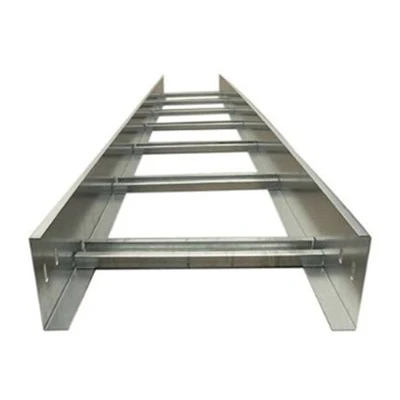
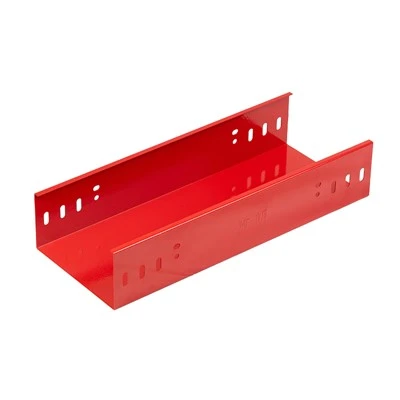
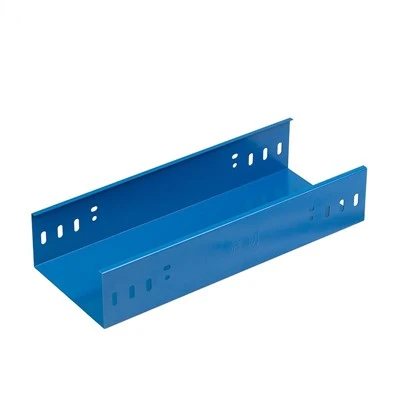
The Aluminum Trough Tray is characterized by its U - shaped design, which provides a large surface area to hold multiple cables. This design also offers protection to the cables from external elements such as dust, moisture, and mechanical damage.
Factors Affecting the Self - Weight of Aluminum Trough Trays
The self - weight of an aluminum trough tray is determined by several factors. Let's take a closer look at these factors:
Tray Dimensions
One of the most significant factors influencing the self - weight is the size of the trough tray. Larger trays with greater length, width, and height will naturally weigh more than smaller ones. For example, a tray that is 10 feet long and 2 feet wide will weigh more than a tray that is 5 feet long and 1 foot wide, assuming the same thickness of the aluminum material.
Aluminum Thickness
The thickness of the aluminum used in manufacturing the trough tray also plays a crucial role. Thicker aluminum sheets result in a heavier tray. Different applications may require different thicknesses of aluminum. For high - load applications where the tray needs to support a large number of heavy cables, a thicker aluminum tray is often used.
Tray Design and Configuration
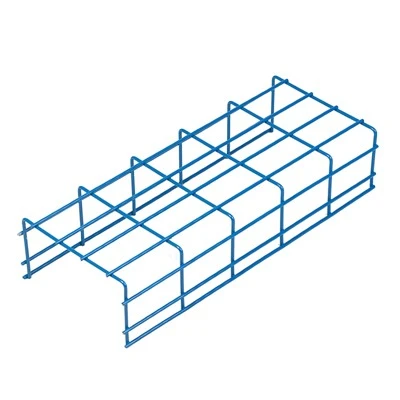
The design and configuration of the tray can also impact its self - weight. Some trays may have additional features such as ribs or perforations. Perforated trays, like the Aluminium Perforated Cable Tray, are lighter than solid trays because the holes reduce the amount of aluminum used. On the other hand, trays with more complex designs or additional structural elements may weigh more.
Calculating the Self - Weight of Aluminum Trough Trays
To calculate the self - weight of an aluminum trough tray, we need to consider the volume of the aluminum used and the density of aluminum. The density of aluminum is approximately 2.7 g/cm³.
The formula for calculating the volume of a rectangular trough tray is:
[V = l\times w\times t]
where (l) is the length, (w) is the width, and (t) is the thickness of the aluminum sheet.
Once we have the volume ((V)), we can calculate the weight ((W)) using the formula:
[W=\rho\times V]
where (\rho) is the density of aluminum.
For example, let's assume we have a trough tray with a length of 60 inches (152.4 cm), a width of 12 inches (30.5 cm), and a thickness of 0.1 inches (0.254 cm).
The volume of the tray is:
[V=152.4\times30.5\times0.254 = 1173.94\text{ cm}^3]
The weight of the tray is:
[W = 2.7\times1173.94=3169.64\text{ g}\approx3.17\text{ kg}]
It's important to note that this is a simplified calculation. In real - world scenarios, we also need to account for factors such as tray design, any additional features, and manufacturing tolerances.
Importance of Knowing the Self - Weight
Understanding the self - weight of an aluminum trough tray is crucial for several reasons. Firstly, it helps in proper installation. The mounting structure needs to be able to support the combined weight of the tray and the cables it will carry. If the self - weight is underestimated, the mounting system may fail, leading to safety hazards.
Secondly, it is important for transportation and handling. Knowing the weight of the trays allows for better planning of logistics. It helps in determining the number of trays that can be safely loaded onto a truck and the type of equipment required for lifting and moving the trays.


Comparison with Other Types of Cable Trays
When comparing aluminum trough trays with other types of cable trays, such as the Single Rail Aluminum Cable Tray, the self - weight can vary significantly. Single rail aluminum cable trays are generally lighter because they have a more minimalist design and use less material.
However, aluminum trough trays offer better cable protection and can hold a larger number of cables in an organized manner. Depending on the specific requirements of your project, you need to balance the self - weight with the functionality and performance of the cable tray.
Conclusion
In conclusion, the self - weight of an aluminum trough tray is influenced by factors such as tray dimensions, aluminum thickness, and tray design. By understanding these factors and using the appropriate calculation methods, you can accurately estimate the self - weight of the trays for your projects.
As a professional Aluminum Trough Tray supplier, I am committed to providing high - quality products with detailed specifications, including self - weight information. Whether you are working on a small - scale residential project or a large - scale industrial development, our aluminum trough trays can meet your needs.
If you are interested in purchasing aluminum trough trays or have any questions about their self - weight or other properties, I encourage you to reach out to us for a consultation. We are ready to assist you in finding the most suitable cable management solutions for your projects.
References
- Perry, R. H., & Green, D. W. (1997). Perry's Chemical Engineers' Handbook. McGraw - Hill.
- Marks, L. S. (2007). Mechanical Engineers' Handbook. McGraw - Hill.