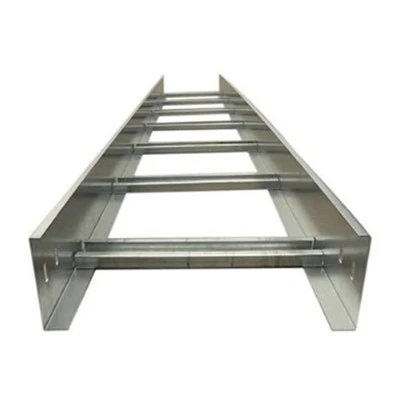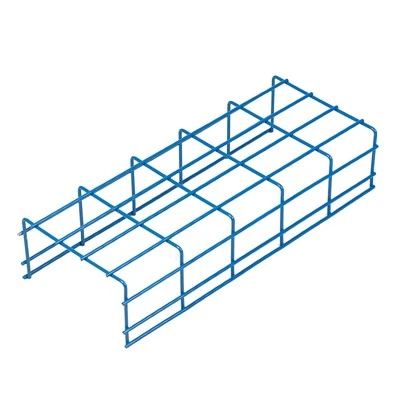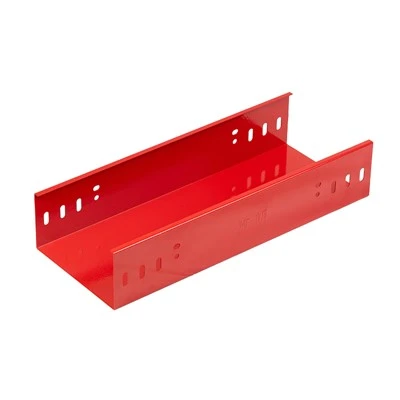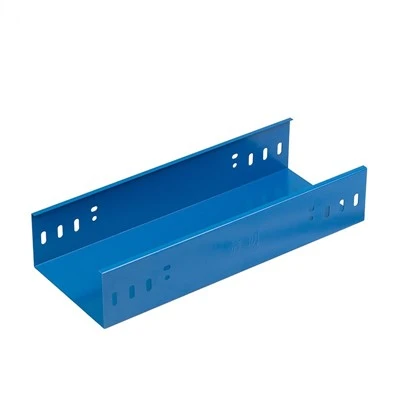

Tray-type cable trays consist of an open tray structure formed by a base plate and side plates. The width of the tray is greater than that of traditional trough-type cable trays, meeting the needs of high-capacity cable laying. A patent for a splicing cable tray published in 2024 shows that its main body adopts a plug-in design, achieving quick connection through a positioning plate and plug-in part, combined with bolt limiting plates to enhance splicing stability. Perforated cable trays have evenly spaced ventilation holes in the base plate and side plates, combined with elastic soft sheet covering, balancing heat dissipation performance and cable protection requirements.
Based on structural type, tray-type cable trays can be divided into perforated trays, non-perforated trays, and assembled trays. Perforated trays consist of a perforated base plate and side plates or are made from a single piece of steel plate after punching and bending, providing good heat dissipation performance. Non-perforated trays consist of a base plate and side plates or are made from a single piece of steel plate, providing dustproof and interference-proof performance. Assembled trays are connected by bolts or plugs using perforated components suitable for arbitrary combination on-site. Tray-type cable trays have shallower and wider troughs, suitable for laying large-section cables.