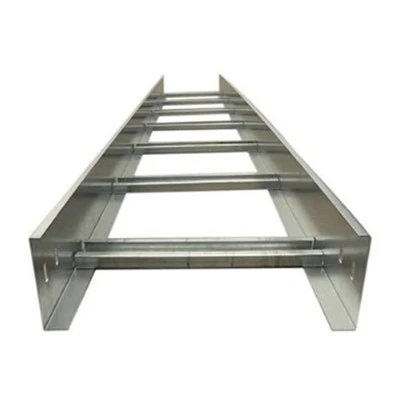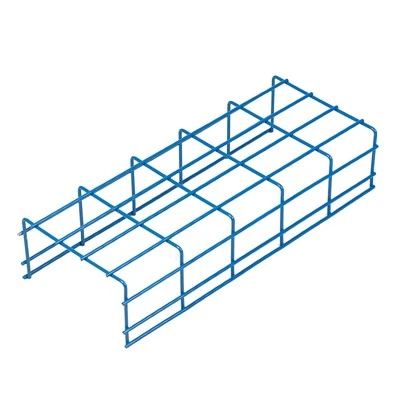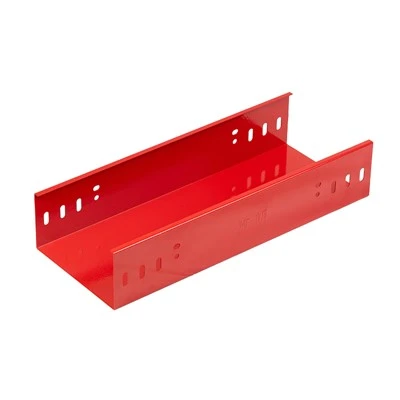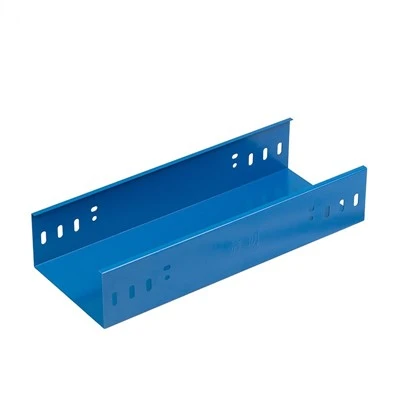

The material of cable trays is another common issue in cable tray engineering design. According to material classification, cable trays are mainly made of steel, fiberglass, and aluminum alloy. Fiberglass cable trays are characterized by their light weight, only 1/4 the weight of carbon steel; good water and corrosion resistance, making them suitable for chemical plants. They are not easily combustible, with flame-retardant fiberglass cable trays having an oxygen index ≥32. They have a long service life, generally designed for 20 years, but their price is three times that of steel cable trays. Their construction advantages lie in their ease of cutting and flexible assembly, and the fact that installation does not require open flames. This is particularly significant for chemical plant projects with explosive hazards and tight schedules, as open flame installation in such environments necessitates plant shutdown, inevitably impacting economic efficiency.
Aluminum alloy cable trays are also very lightweight. Due to the different specific gravities of aluminum and steel (Al=2.7, Fe=7.86), the weight ratio of aluminum to steel is approximately 1:3. The dimensions and load characteristics of aluminum alloy cable trays are basically similar to those of steel cable trays. In terms of cost, aluminum alloy cable trays cost 20% more than galvanized steel cable trays, but their service life is more than five times that of steel cable trays.